Strong governance doesn’t happen by accident. It’s built through clear expectations, shared understanding, and access to the right information at the right time. One of the most practical—and often overlooked—tools for supporting effective nonprofit governance is a well-designed Board Member Manual.
A board manual is more than a binder of documents collecting dust on a shelf. Done well, it’s a central, living resource that helps board members understand their roles, fulfill their legal duties, and work together more effectively.
What Is a Board Member Manual?
While we use the term “manual,” in practice this is typically a digital folder containing a collection of files rather than a single document. Access is managed through permissions—some users may have view-only rights, while others have full editing capability.
At its core, a board member manual is a centralized repository of current information that enables board members to function knowledgeably, legally, and confidently. Best practice is to store it digitally in a secure, accessible location with clear version control, so board members always know they’re working from the most up-to-date information.
To protect the integrity of the manual, the main version should be kept in an uneditable format (such as PDF), with a separate working file used for updates and improvements.
Why Board Manuals Matter
Research consistently points to two factors that have the greatest impact on board effectiveness:
- A clear understanding of board roles and responsibilities
- The ability of board members to work collaboratively toward shared goals
A strong board manual supports both. It reinforces the board’s core legal duties—care, loyalty, and obedience—and sets clear expectations around preparation, participation, attendance, and decision-making.
Policies like confidentiality, conflict of interest, code of conduct, and media communications form the backbone of sound board governance. These aren’t just administrative formalities—they set clear expectations for how board members conduct themselves and make decisions, both inside and outside the boardroom.
- Confidentiality — Board members are regularly entrusted with sensitive information: personnel matters, legal advice, financial details, and strategic discussions. A confidentiality policy makes clear what information is to be protected, how it should be handled, and that the obligation continues even after a board member’s term ends.
- Conflict of Interest — Every board member brings outside relationships and interests to the table. A conflict of interest policy establishes how to identify, disclose, and manage situations where a personal or professional interest could—or could appear to—influence board decisions. In the Canadian nonprofit sector, managing conflicts transparently is both a legal expectation and a matter of public trust.
- Code of Conduct — This policy articulates the standards of behaviour expected of all board members: respectful communication, ethical decision-making, and accountability to the organization’s mission and the communities it serves. It also typically outlines what happens if those standards aren’t met.
- Media and Communications — Boards should be clear about who is authorized to speak on behalf of the organization, under what circumstances, and through which channels. This protects the organization from mixed messaging, reputational risk, and inadvertent disclosure of confidential matters.
- Other essential policies may include whistleblower protection, document retention, financial signing authorities, and harassment and discrimination policies—many of which may be legally required depending on your province and the size of your organization.
Including these policies in the board manual ensures every director knows the rules of the road from day one—and has somewhere to turn when a situation calls for guidance.
Supporting Onboarding and Ongoing Governance
Bringing a new board member on board takes more than a welcome email and a meeting invite. New directors typically need information at three levels:
- Legal responsibilities — what it means to serve on a Canadian nonprofit board, including fiduciary duties and liability
- Organizational knowledge — the governance model, structure, and expectations specific to your organization
- Current context — the realities on the ground, including finances, staffing, strategic priorities, and external trends
A board manual provides a consistent foundation for onboarding while also serving as a go-to reference for experienced directors working through complex decisions. It reduces the learning curve, builds confidence, and helps ensure continuity when board membership changes.
Often a separate new board member orientation package, or an on-boarding manual, is created specifically to support new members at the beginning, while the board member manual is for ongoing reference.
What Should a Board Manual Include?
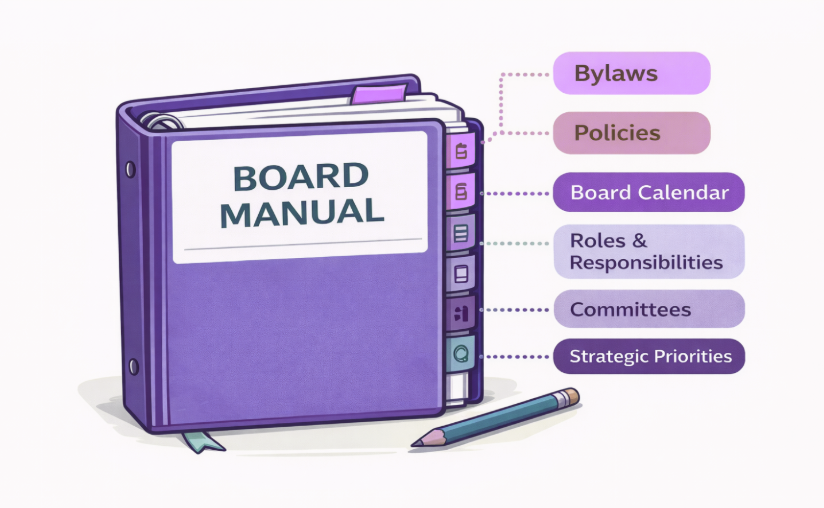
Every organization is different, but most board manuals cover the following:
- Organizational profile — mission, vision, values, and strategic direction
- Legal and foundational documents — bylaws, letters patent or articles of incorporation, policies, and key contracts
- Board operations — governance practices, committee structures, meeting procedures, and decision-making processes
- Financial information — current budget, recent financial statements, and signing authorities
- Minutes and reports — recent board minutes and key organizational reports
- Board education resources — professional development opportunities, governance guides, and sector resources
The goal isn’t volume—it’s relevance and clarity. A manual that’s too long or disorganized won’t get used.
A Note on Confidentiality and Access
Not all board documents carry the same sensitivity. Personnel matters, legal advice, and certain financial details may need to be restricted even within the board. When setting up your digital manual, think carefully about tiered access—what every board member should see, what only certain roles (such as the board chair or treasurer) need, and what should remain strictly confidential. Clearly labelling documents and setting appropriate permissions from the start saves headaches later.
Choosing the Right Platform
The best platform for your board manual is one your board will actually use. Common options include Google Drive, SharePoint, Microsoft OneDrive, or purpose-built board management tools like Boardable or Govenda. Whatever you choose, prioritize ease of access, reliable security, and the ability to manage permissions clearly. A beautifully organized manual that lives somewhere nobody can find—or log into—doesn’t help anyone.
Maintaining the Manual
A board manual is only useful if it stays current. Assign clear ownership for updates, establish a regular review cycle (annually at minimum), and use consistent version tracking so there’s never confusion about which document is current. Boards should periodically assess what information already exists, what needs refreshing, and what may still need to be developed.
The Board Is Responsible for Itself
One principle worth emphasizing: the board is responsible for its own effectiveness. That includes recruitment, succession planning, professional development, onboarding, and governance documentation. Staff can support these efforts, but boards need to own them in order to function independently and well. A board manual is one of the clearest expressions of a board taking that responsibility seriously.
A Simple First Step
If your organization doesn’t have a board manual—or hasn’t looked at it in years—start by taking stock of what you already have. Gathering and organizing existing documents often reveals both strengths and gaps, and gives you a clear picture of where to focus your energy.
A strong board manual sets everyone up for success: confident leadership, better decision-making, and more resilient organizations doing important work in our communities.
